Summary
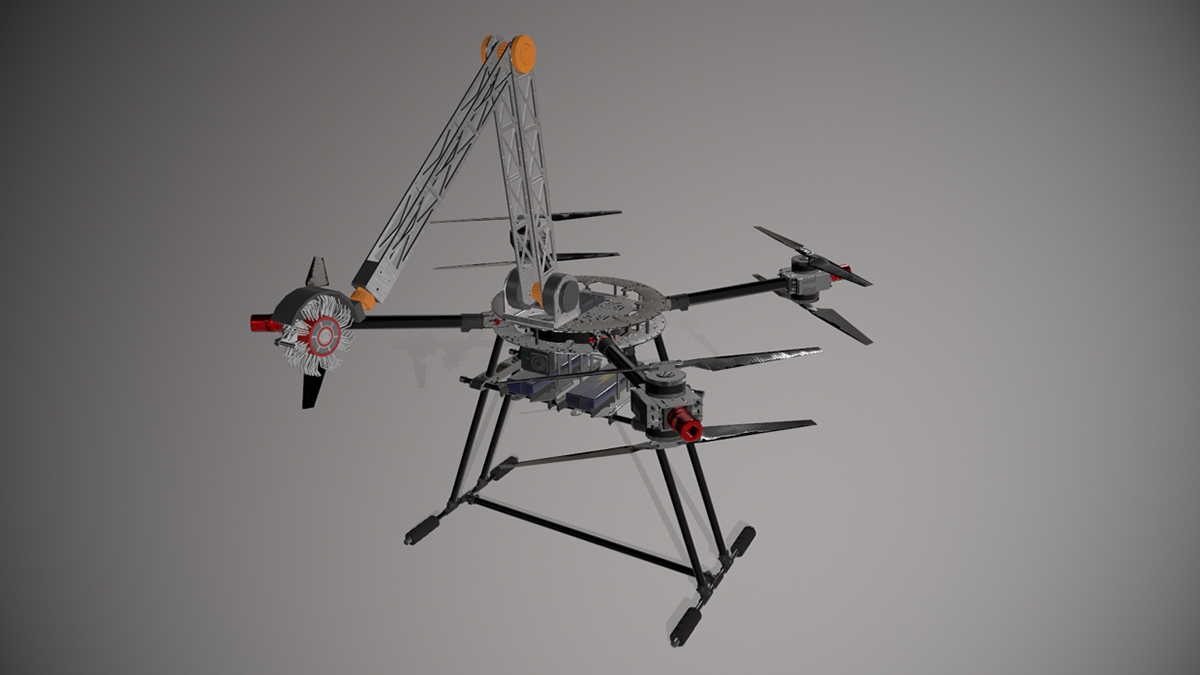
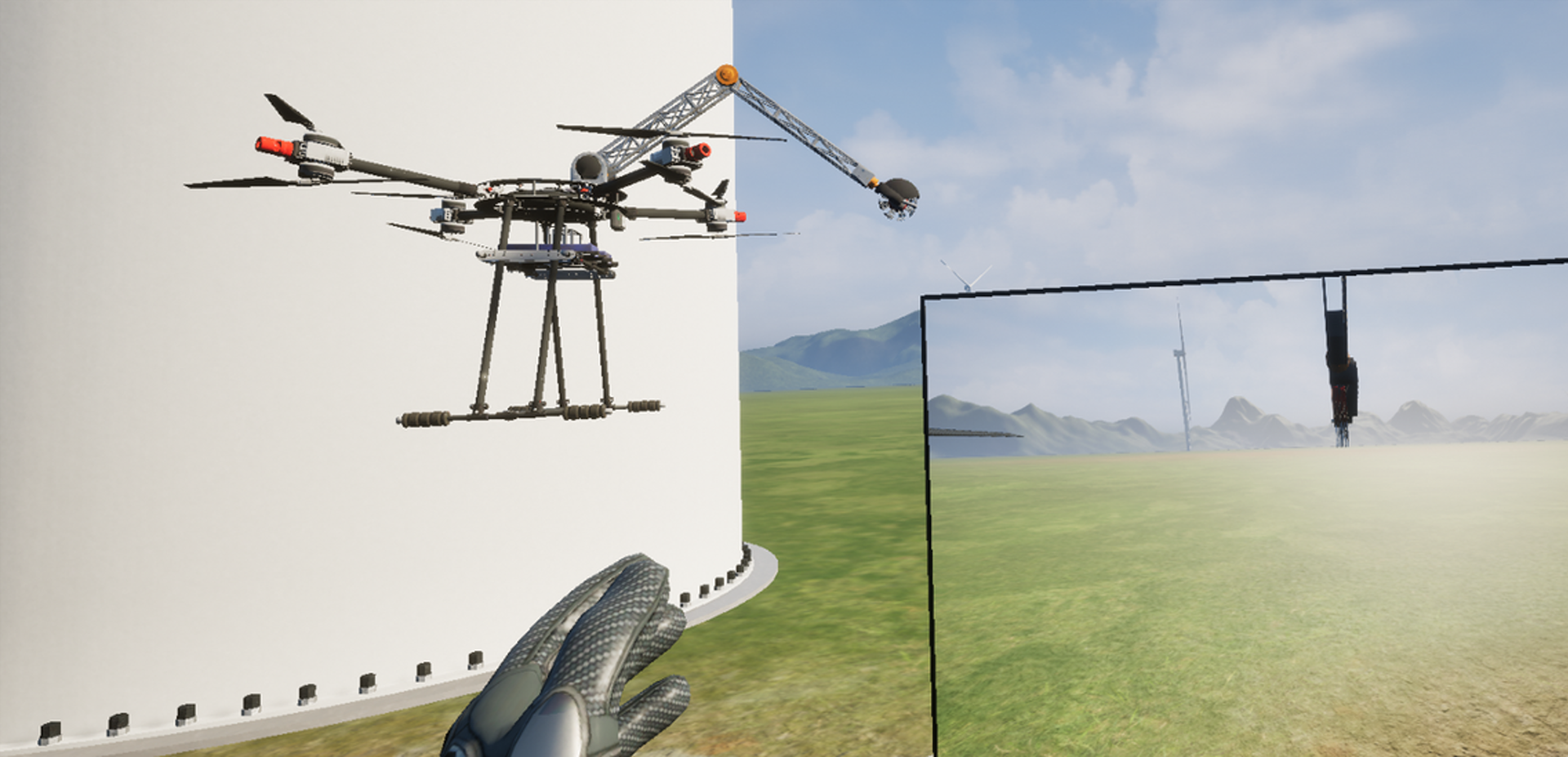
With the rise of wind turbines in favor of sustainably generated energy, a growing need for maintenance work is due to keep them intact. Though wind turbine maintenance specialists are available, they cannot keep up with the increasing amount of wind turbines being built, the process also being dangerous. As such, drones are being developed to make this process safer and time efficient. Next to this development, a student group project was initiated, to create a virtual reality (VR) simulation for such maintenance.
Trailer
Flowchart
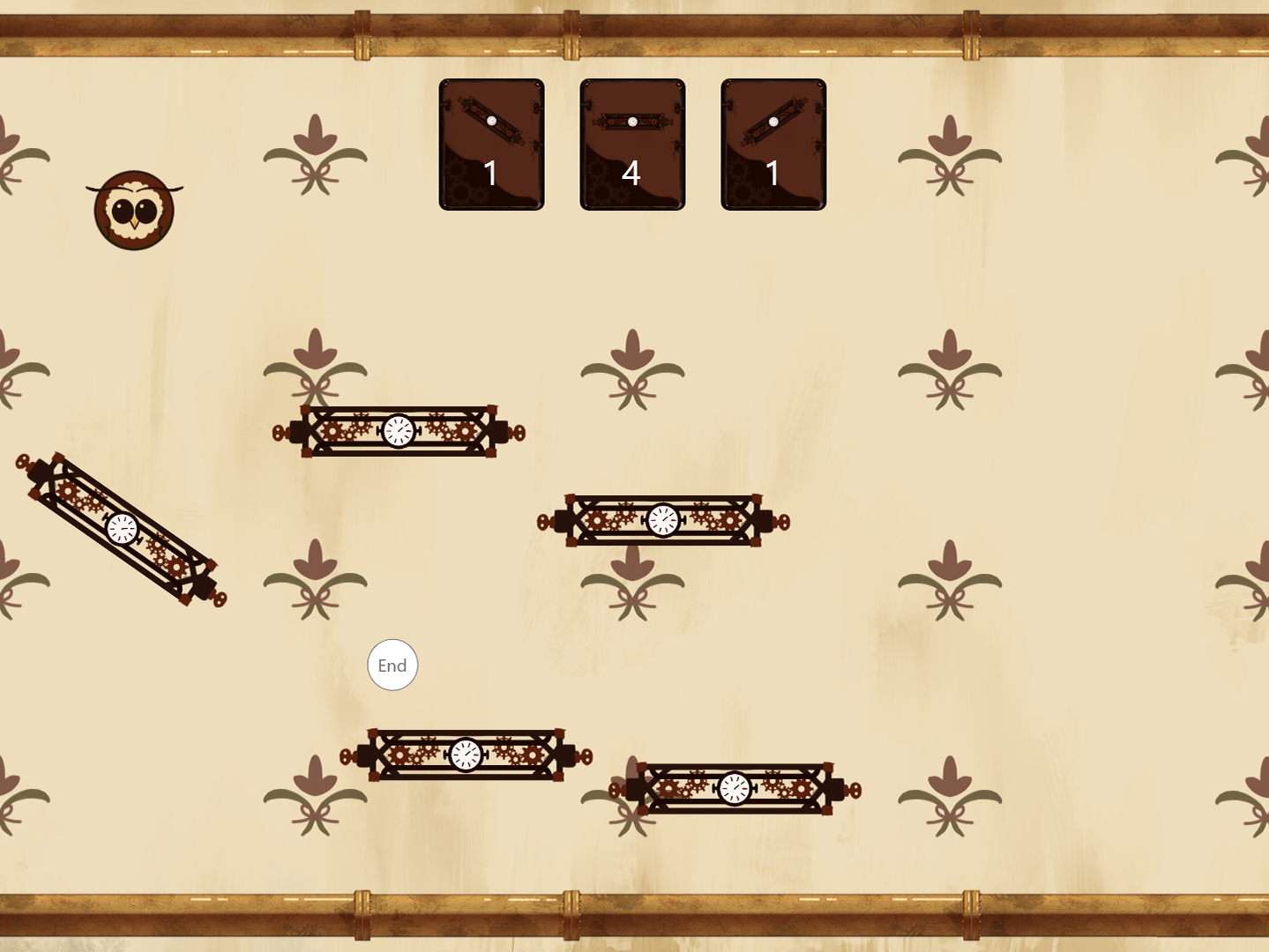
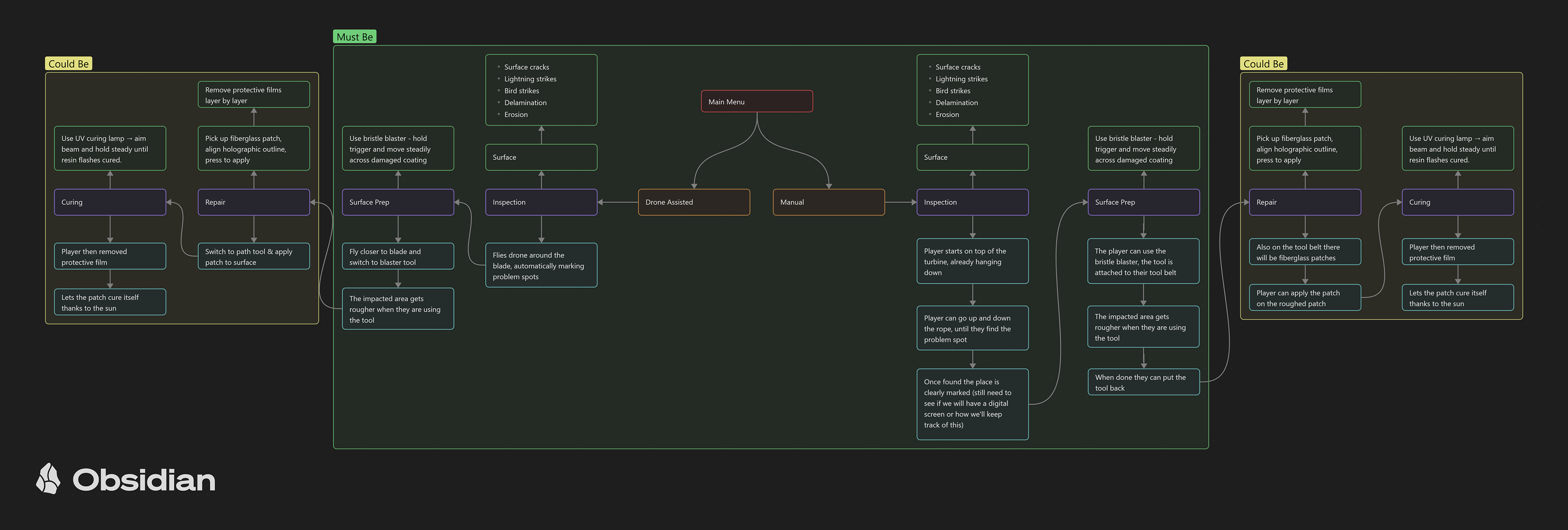
The flowchart was made to better understand the process of wind turbine maintenance and transform each step of the process into something that can be gamified and used as a gameplay element.
Levels
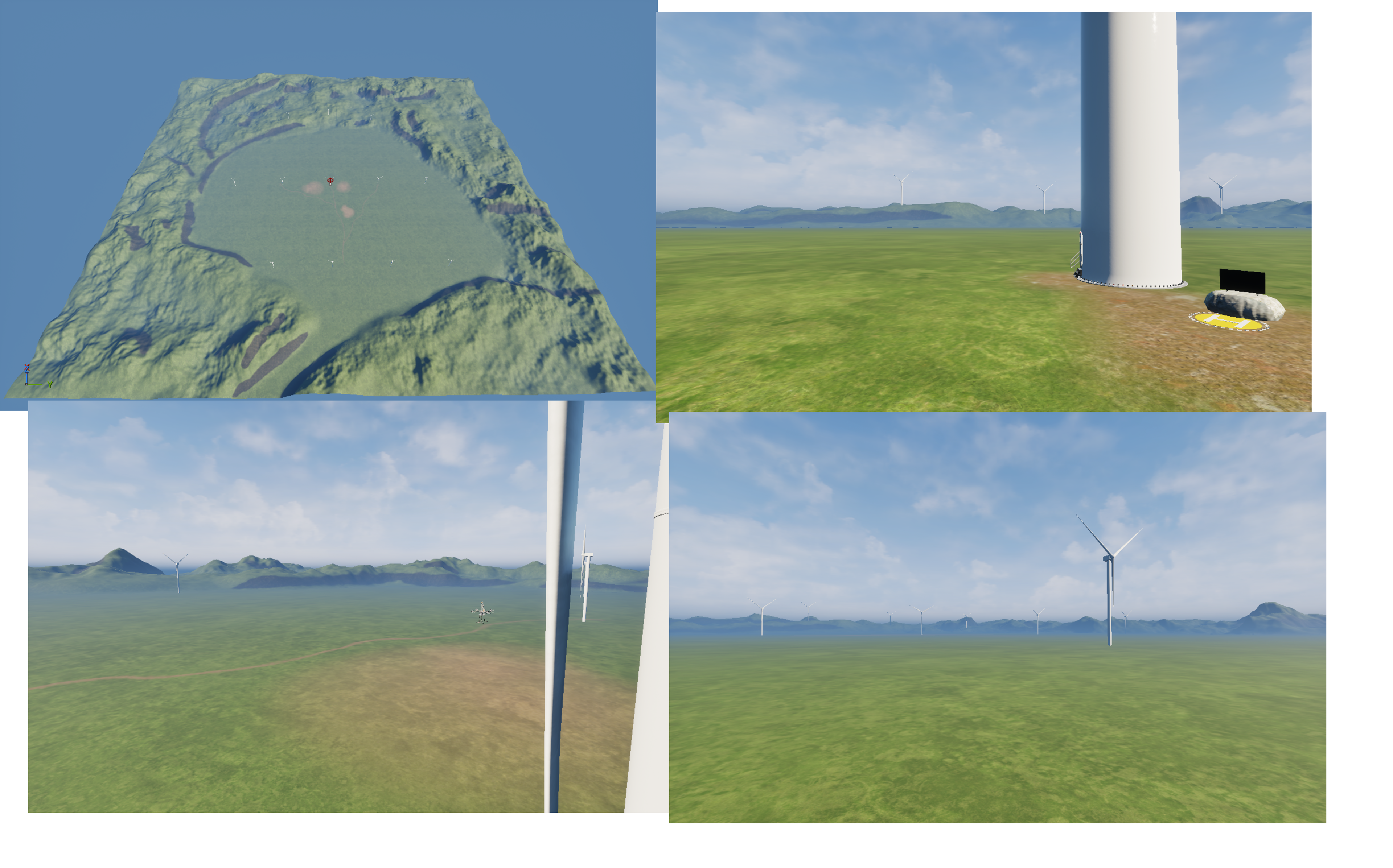
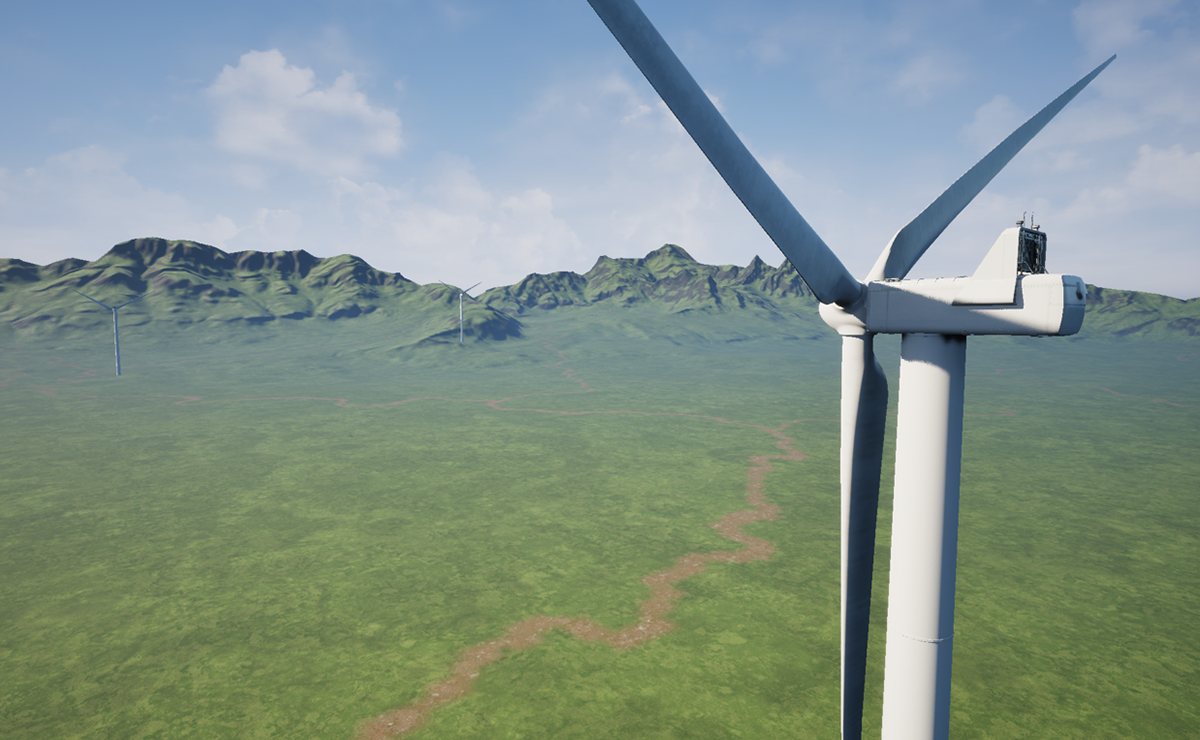
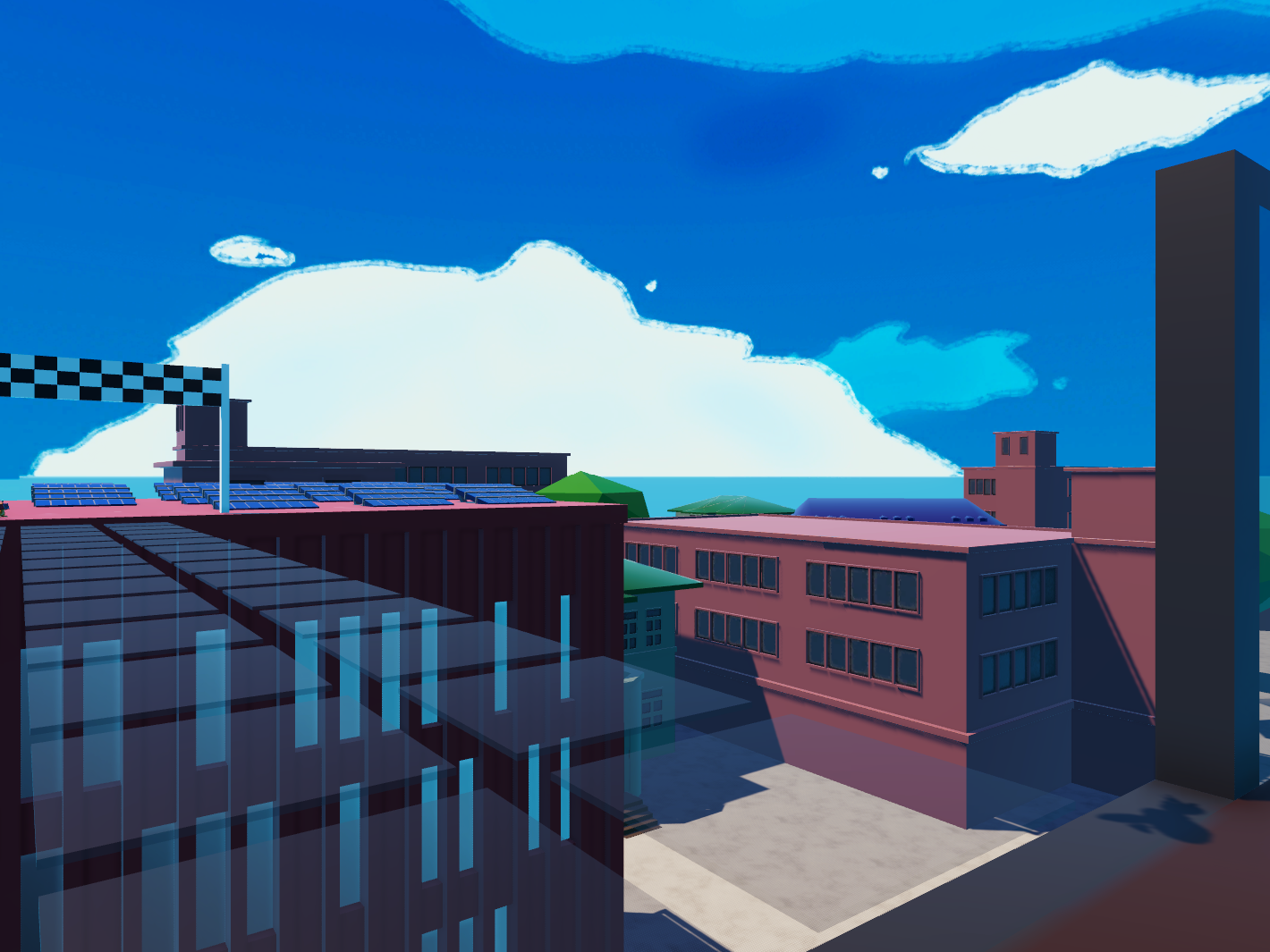
This level was created with the help of a procedural terrain generation tool called Gaea. We needed a realistic looking plains environment as one of the areas where wind turbines are located, and with the help of this tool
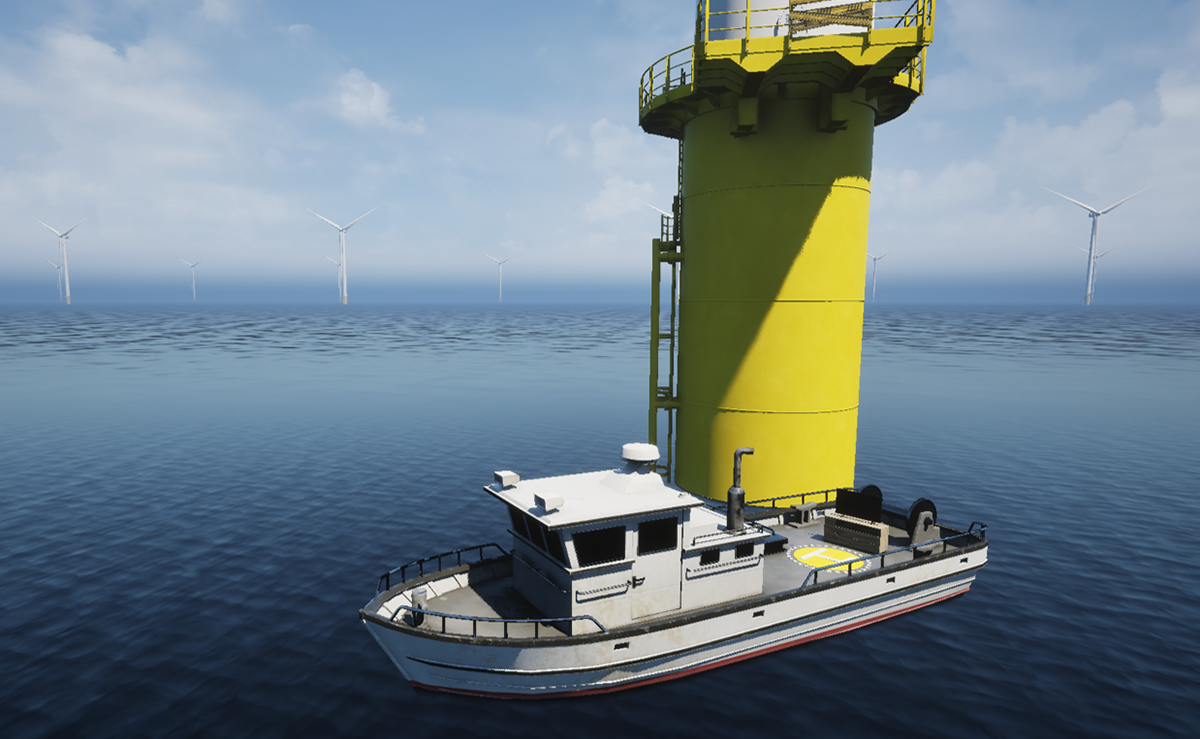
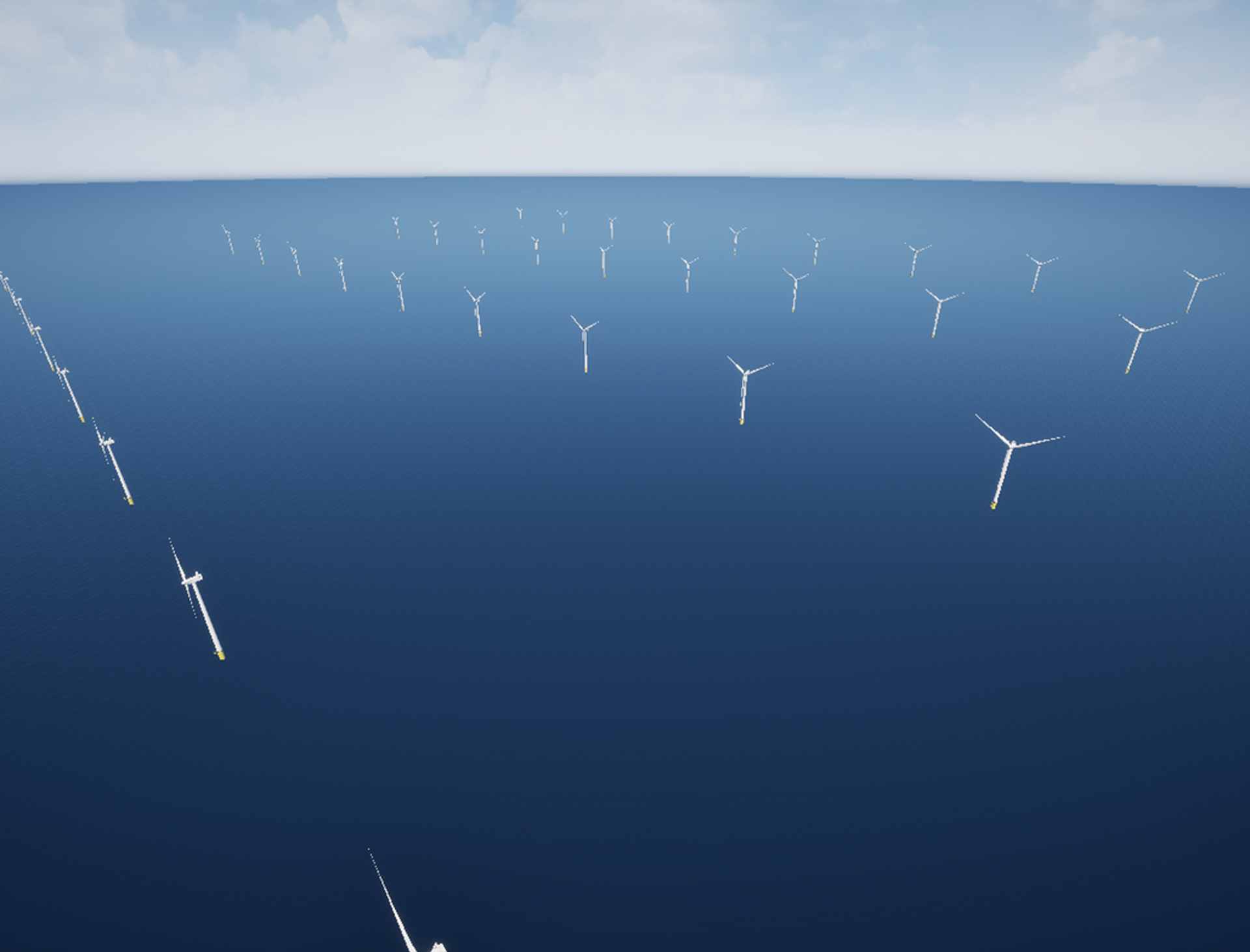
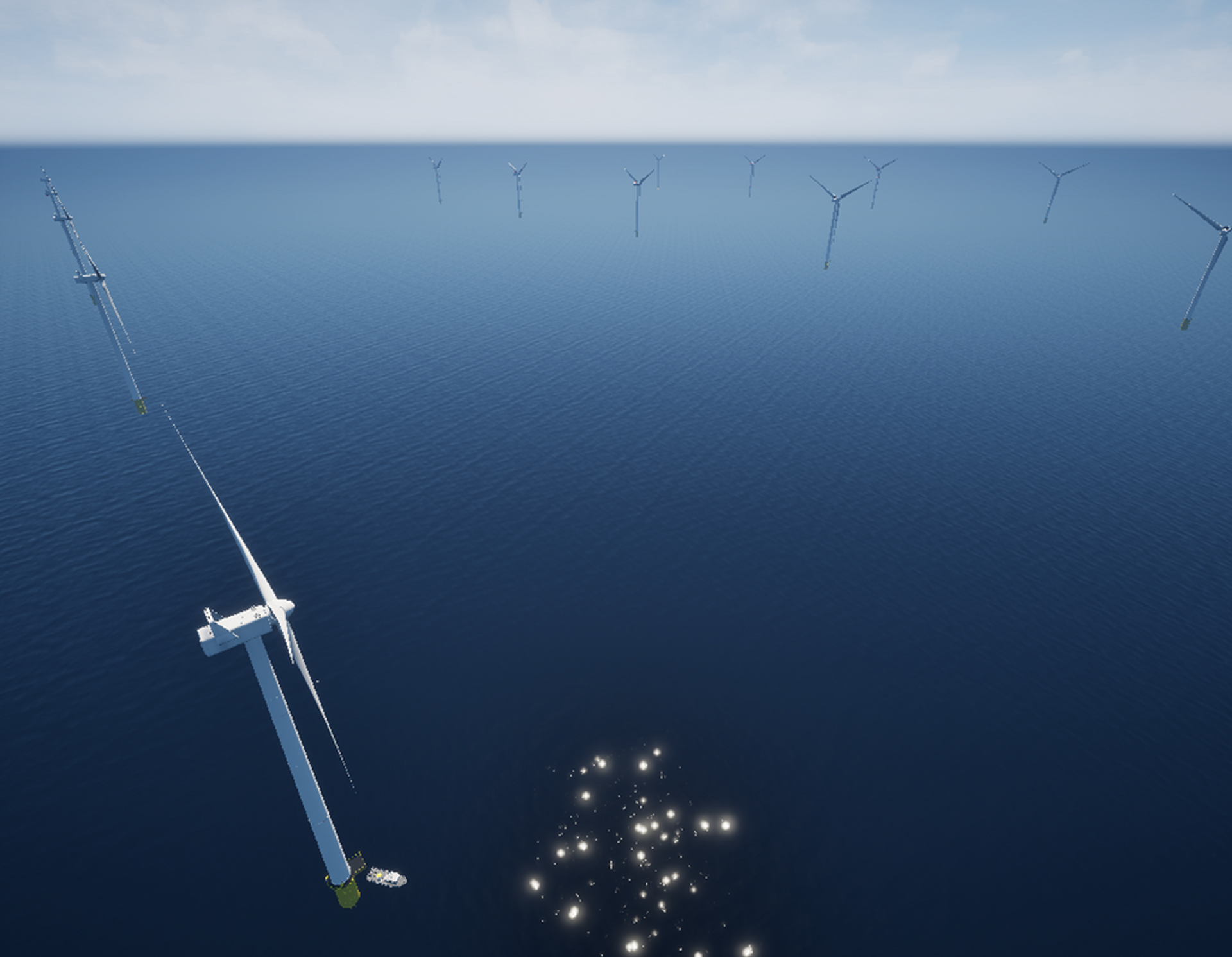
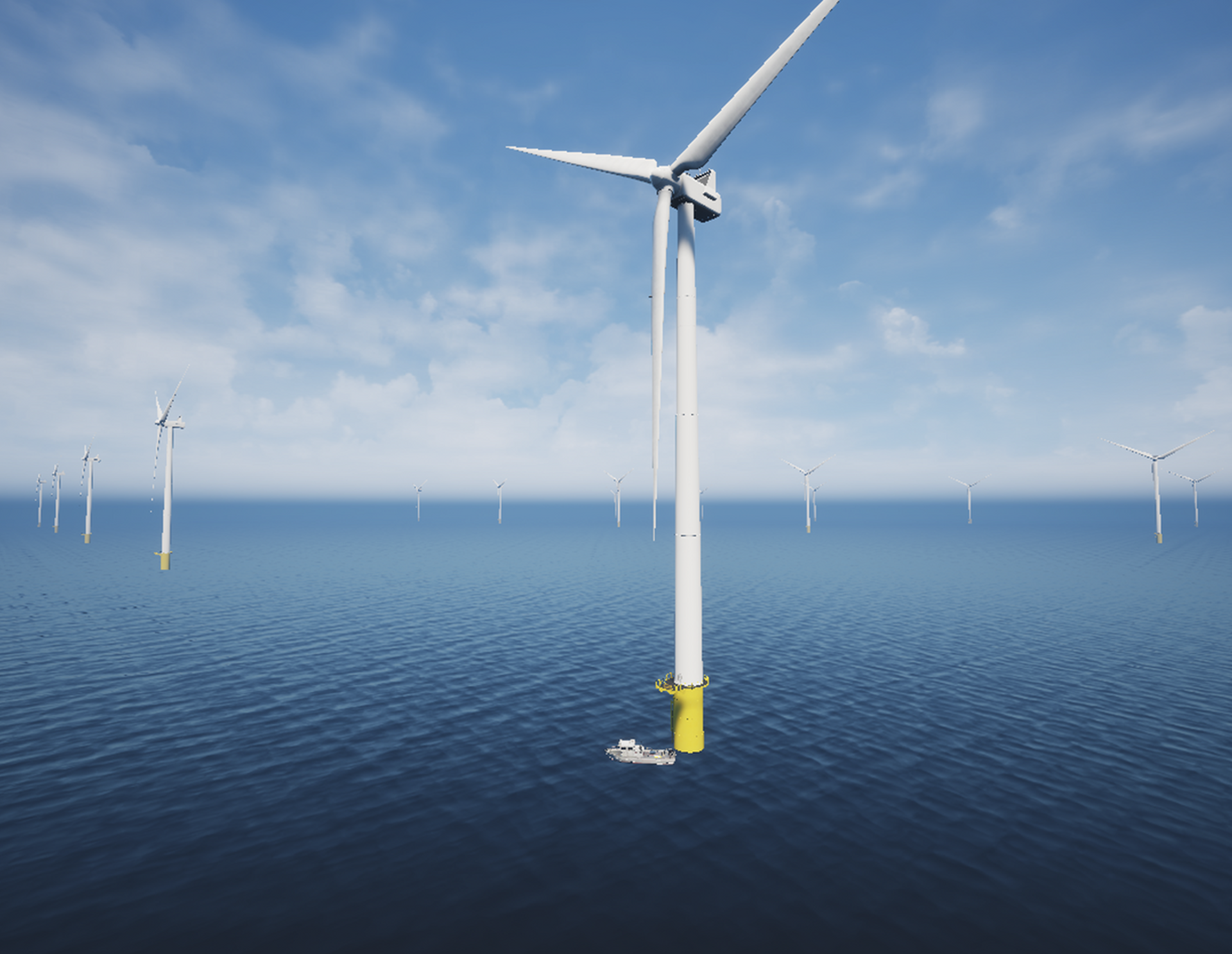
The water level was easier to create and iterate since it mainly consists of a water body. This was meant as an alternative to the first level in a different environment.
UI Development
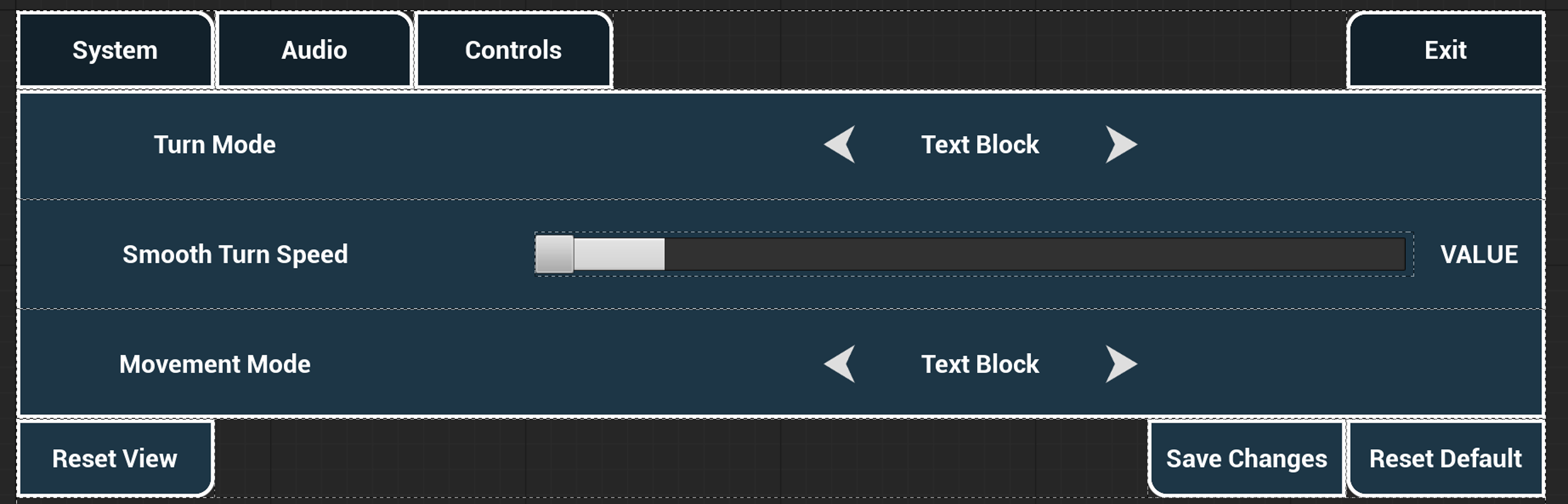
Although I was not responsible for designing the UI, I played a key role in implementing the front-end functionality and translating the design into a fully functional interface within Unreal Engine. This involved building the UI components, integrating them with the underlying systems, and ensuring a smooth user experience.
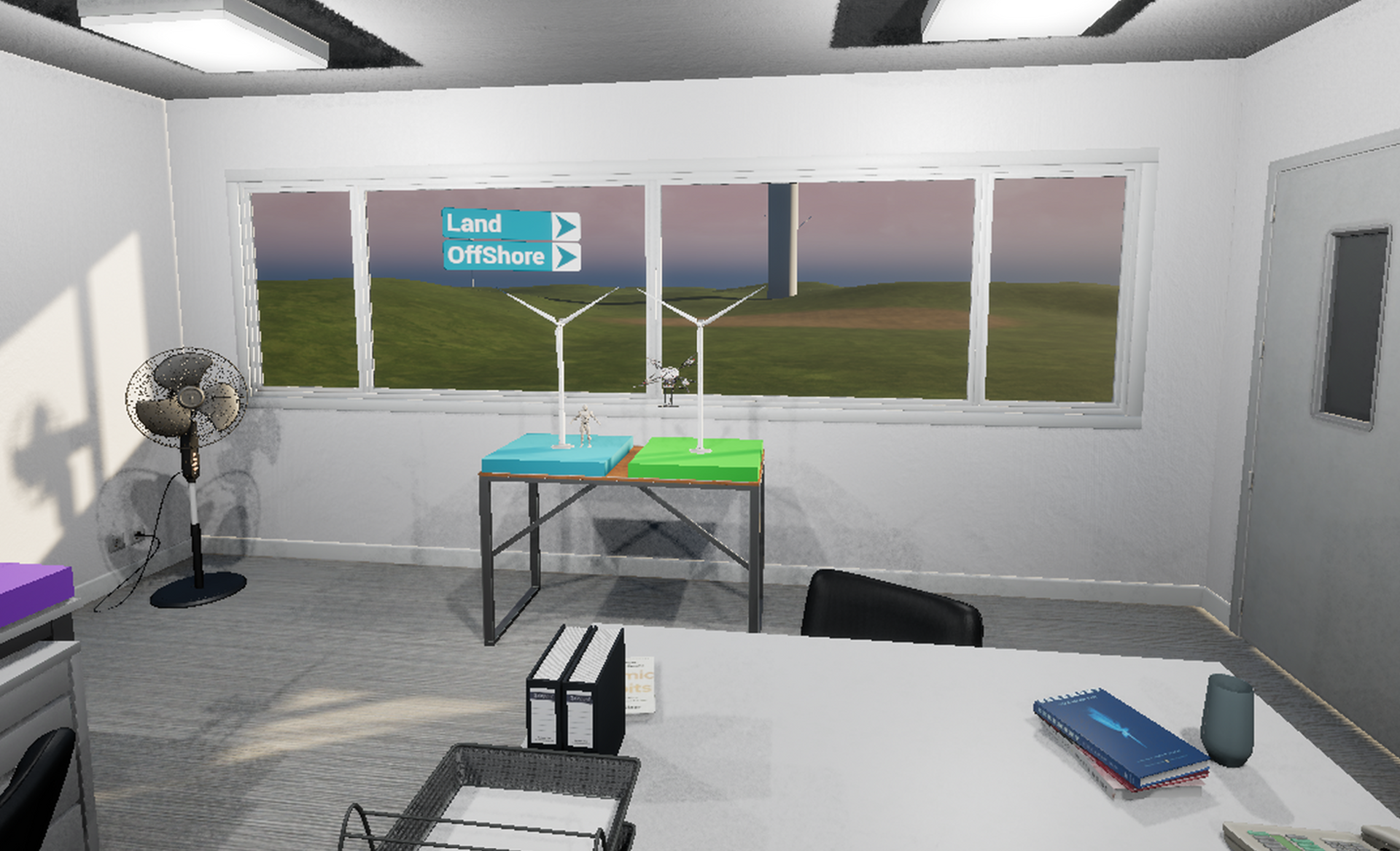
Also important to note is that because of the VR aspect of the game, a simple UI could not be simply implemented so creative solutions were designed to solve this issue. For example, the level selection is not a menu, but instead a level by itself, and the settings menu was made in such a way that it can feel like a screen tablet, being attached to the player's wrist, and could be interacted as such
Tutorial
A very needed aspect for this project in particular was the tutorial. This project has a general target audience of people that have not ever or very rarely played on a VR headset. As such we needed to make sure the people that tested our game knew how to use VR, so we created an extensive tutorial that goes through all VR mechanics, from the very basics to more complex.
Other Contributions
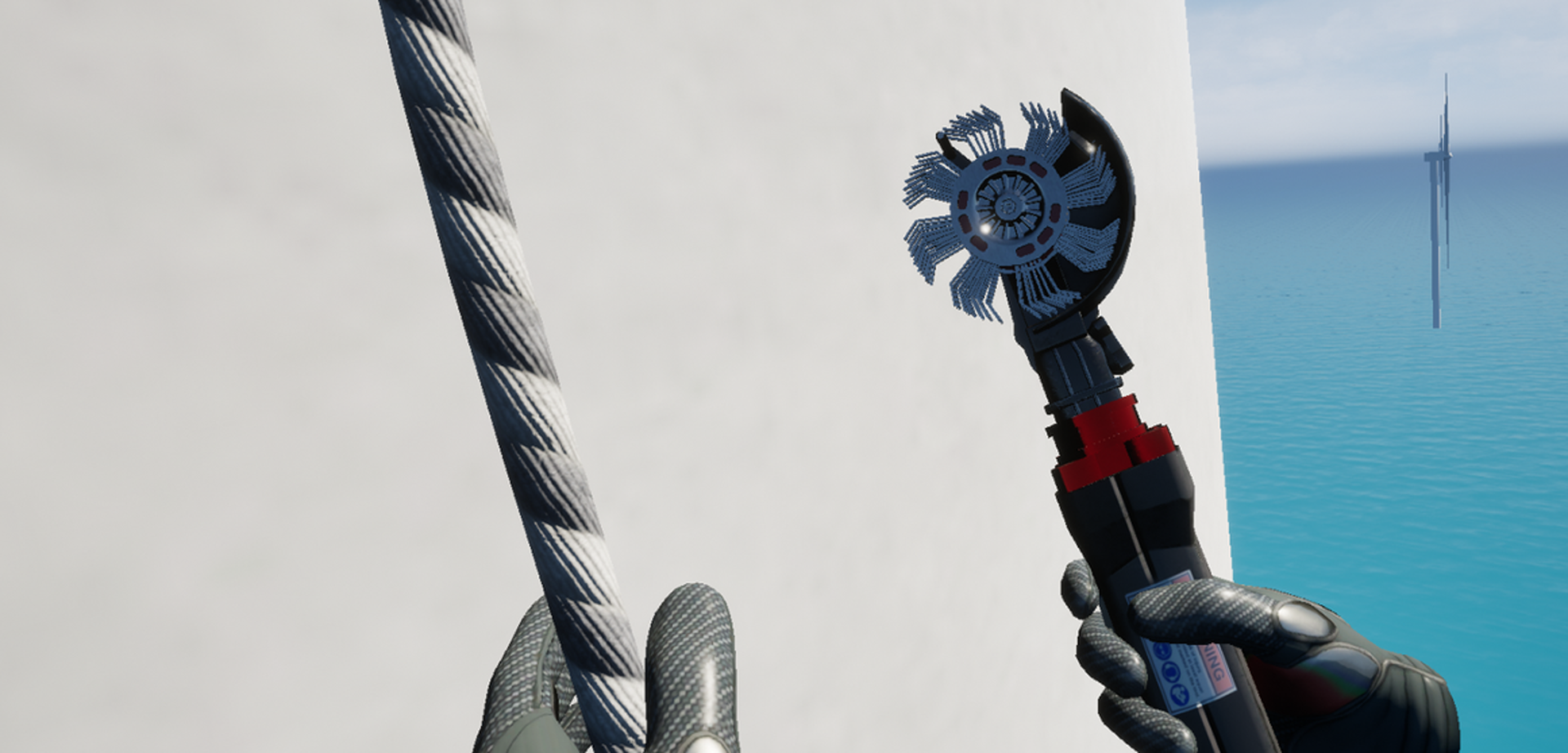
During this project I have developed my technical designing skills. While working on the frontend of UI elements, I also worked on programming some aspects of the game, more specifically, a physics based rope that can be held and used in VR. While there were options from unreal for physics based ropes, none worked well in VR. The rope that we have in the game is created very simply by stacking cylinders one next to the next and connected by physics constraints components and drawing a spline on top of them. This allows the game to see the basic cylinders and physics objects, while allowing the player to see a nicely drawn spline that does not have any breaks or so on top.
Gallery